Monday, February 14, 2005


a korean activist carries their flag.

over a hundred thousand people joined the opening march of the WSF 2005 filling the streets of Gasometro with songs and dances from all over the world.

shouts of "Viva Viva Palestina"! reverberate at the closing march of the World Social Forum in Porto Alegre. 31 January 2005

Tuesday, January 18, 2005

Senyor Cohen


Dear Heather by Leonard Cohen 2004Posted by Hello

January 5 nang huli kaming magjamming ni koyang sa lilim ng talisay. Ibinahagi niya ang kanyang mga bagong awit at sinuklian ko ng mga hiram na kanta mula kay Leonard Cohen. Simula nun ay nasa Leonard Cohen mode na ako. Paguwi ko sa bahay nung gabi na yun, salpak sa CD player: leonard cohen, pagsampa sa my bros. mustache para sa 12-2 set namin ni boy d: leonard cohen, kagabi sa opisina ng grey matter: leonard cohen pa rin. Ngayon sa opis habang pinipilit na habulin ang mga deadline: leonard cohen uli. Ito ang isang kanta mula sa pinaka bago niyang album na Dear Heather.

Pagsaluhan natin.

There for you

When it all went down and the pain came through
I get it now I was there for you
Don't ask me how I know it's true
I get it now I was there for you
I make my plans like I always do
But when I look back I was there for you
I walk the streets like I used to do
And I freeze with fear but I'm there for you
I see my life In full review It was never me It was always you
You sent me here you sent me there, breaking things I can't repair
Making objects out of thoughts, making more by thinking not
Eating food and drinking wine, A body that I thought was mine
Dressed as Arab dressed as Jew, O mask of iron I was there for you
Moods of glory, moods so foul
The world comes through, a bloody towel
And death is old, but it's always new
I freeze with fear And I'm there for you
I see it clear, I always knew
It was never me I was there for you, I was there for you
My darling one, and by your law it all was done

Monday, December 13, 2004

smile in the shadows


Mumbai lady. Marine Drive, Mumbai, India. January 2004. photo by sep Posted by Hello

I don’t remember her name. In fact I don’t recall even asking and she never bothered telling me. But I won’t forget that late afternoon by the beach. She was moving around painting people's hands with henna. I’ll always remember her smile and how she, like the rest of us there, seemed oblivious to what was happening beyond the wonderful confines of the beach at sunset.

Thanks to a borrowed Leica, i was able to capture her smile in the shadows.

Sunday, December 05, 2004

Dylan’s Chronicles


Bob Dylan's CHRONICLES: Vol. One published by Simon & Schuster
Posted by Hello

The new Bob Dylan book is out. In “Chronicles: Volume 1” Dylan, who penned such beautiful yet sad narratives like the Ballad of Hollis Brown, the Lonesome Death of Hattie Carrol, Seven Curses, Blind Willie Mctell and John Brown, shares his own story for a change. Chronicles is Dylan’s personal account of significant moments in his life and career. I haven’t read the book, but if the excerpts that I have read and listened to are any indication, Dylan’s stories may prove to be as interesting as his songs.

A CD version, with excerpts from the book wonderfully read by Sean Penn, is also available. In one such excerpt, Dylan tells of his frequent visits to his idol and friend Woody Guthrie. Guthrie, who Dylan calls “The true voice of the American Spirit”, was already confined by then to the Greystone Hospital, a mental institution. Dylan recounts visiting him, bringing "cigarettes and playing songs for him." Dylan sang for Woody, Woody's own songs like Dust Bowl Blues, Pretty Boy Floyd, and Tom Joad, which Dylan all knew by heart. In one of these visits, Woody tells Dylan about boxes of songs that havent been recorded and said that Dylan was welcome to them. Woody gave Dylan directions to his house in Mermaid Avenue, Coney Island. Like a true disciple, Dylan took the subway and made the trip to Woody’s house. Dylan recounts “a babysitter opened the door. Margorie was not there but Woody’s son Arlo who was just about 10 or 12 years old then told the babysitter to let me in.” Dylan left Woody’s house without seeing the boxes of songs that Woody told him about. “40 years later Billy Bragg and the group Wilco would get access to these songs bringing them full life. Maybe they were not yet even born when I made that trip” said Dylan.

You can listen to the excerpts by visiting http://www.msnbc.msn.com/id/6099172/site/newsweek/


Tuesday, November 23, 2004

Halina: 27 anyos


Halina by Jess Santiago. Cover photo by Nico Sepe and art dIrection by Fidel Rillo. 1991 Posted by Hello


May 2 klase ng kanta, sabi ni Woody Guthrie- the dying songs and the living songs. Ang dying songs daw ay mga “kanta na nagsasabing walang dapat ipagmalaki sa pagiging manggagawa, pero kung mabuti at masipag siya, balang araw maari siyang umangat at maging ‘boss’, at makapagsuot ng puting kurbata at amerikana at balang araw mga kanta ay isusulat tungkol sa kanya.” Meron namang mga ‘living songs’-- “mga buhay na awiting nagsasabing may dangal sa paggawa; mga awiting humihimok sa manggagawa na ipagmalaki ang kanyang sarili at kanyang trabaho; mga awiting nagnanais na pagbutihin ang buhay natin; mga awit ng protesta laban sa mga bagay na dapat tutulan.”

Ang Halina ni Jess Santiago ay isang buhay na awitin. Nung nakaraang linggo, 14 ng Nobyembere 2004, sa main theatre ng Cultural Center of the Philippines, lumutang at pumaibabaw sa katahimikan ng teatro at muling nabuhay sa isip at damdamin ng mga tagapakinig ang awit at kuwento ng Halina. Muling ipinakilala ni Koyang si Lina, manggagawa sa pabrika, si Pedro Pilapil, magsasaka, at si Aling Maria, maralitang taga-lungsod. Sa mga sandaling iyon, ang kanilang mga kuwento ang bida-- binalutan ng ilaw mula sa spotlight ang kanilang buhay at pakikibaka. Sa sandali ring iyon bawat kalabit ng gitara, bawat katagang binitiwan ng pabulong at pasigaw ni Koyang ay makabuluhan.

Buhay na awitin ang Halina dahil binigyan niya ng mukha ang buhay at pakikibaka ng mga karaniwang mamamayan. Buhay siya hanggang ngayon dahil patuloy ang pagsasamantala at karahasan sa mga paggawaan, sa kanayunan, at sa kalunsuran. Ngunit higit sa lahat, nananatiling buhay ang Halina dahil patuloy ang pagpupunyagi ng mga manggagawa, magsasaka, at mga maralitang taga-lungsod para sa mas magandang bukas at patuloy silang nag-aanyaya ng ating pakikiisa.

Mabuhay ang Halina. Mabuhay ka Jess Santiago!

23 November in Dhaka

I was looking for old trade campaign files from my delhi trip last nite trying to prepare for my presentation for Isis and saw this written at the back of one of the papers. I realized a bit later that it was written exactly a year ago today

23 November Dhaka airport

Joy described this airport , which she doesn’t like, as dusty. I was picturing it that way as I was disembarking the plane. What greeted me though as I stepped inside were soldiers. Their long fire arms looking more faded than their uniforms. All around you see security personnel, mostly men. I’ve seen only one woman guard so far. She caught my eye because she was wearing a blue sash over her blue uniform.

I’m seated in front of this big digital clock. 3:14 now. I’ve been here since noon. Just sitting, strying to read a book—Gabriel Kolko’s Another Century of War, a heavy read for passing time at the airport.

Some guy who I thought all the while was Indian Airlines personnel took my ticket. I was a bit suspicious and got a little worried when he took off with my ticket. He did return 30 minutes later with my boarding pass and new tags for both my checked-in and hand-carried bags. I knew this personalized service would eventually cost me something. I said ‘thank you’, when he handed over the boarding pass and tags, knowing that that wasn’t enough. He said “please give me tip sir, I am a poor man.” I jokingly said to him “ I am a poor man also. He said with a smile “ no sir, you are not poor.” I gave him 100 baht, the only other currency I have to spare.

Bangladesh is a poor country. This fact is often mentioned as a reference to to how the Philippines has remained underdeveloped or has stagnated since the 50’s. Then we were second only to Japan in Asia, so the refrain goes, now we are only slightly better than Bangladesh.

Sitting here however, in what I can describe as an airconditioned, slightly bigger bus station, like one of the bus stations serving provincial routes to Baguio or Bicol, I am tempted to think that the Philippines is much better off than Bangladesh. But measuring a country’s progress based on how its airport looks can be problematic. What if a lavish, modern airport gets erected as a showcase by a corrupt government amidst debilitating poverty? In reality majority of poor people don’t really have any use for such flying facilities.

I’m rambling, I’m really writing these thoughts to occupy my mind...

Im alone and blue in this Dhaka bus station. 3:28. The monitor has now shown the gate number for my flite to Kolkota. Another lonely, desolate place to wait.

6pm Kolkota airport

One actually has to go out of the international terminal and walk about 100 meters to go to the domestic terminal. At first I thought, “great, no walkway like the one in Bangkok”, but then I thought the one in Manila is worse, where one has to take a cab just to go from one terminal to the other.

Anyway, the walk outside Kolkata was good. It allowed me a glimpse of the place. And after 7 hours breathing dusty airport air, the air outside was a relief. As I was walking, I wanted on several occassions to get my cameras and shoot. Right outside the international terminal, I saw people doing road repair. I also saw their yellow cabs—nice, fat, yellow cabs circa 1950’s, I guessed. A little later I saw several of them parked in a single line. Nice photo in my mind. The photograph accentuated by a flock of black crows against the night time sky. More photos like these in the next days, I hope. I hope ill be able to click the shutter next time.

An orange butterfly is hovering near me. Could this be an omen? A good one I hope.

Tuesday, November 09, 2004

Life’s brutal ironies


Vote for peace concert in Bangkok. 30 October 2004. Posted by Hello


I was in Bangkok recently and was invited to perform at the Vote for Peace concert at Suan Santi-chaiprakarn in the old-part of town. The day I arrived, a state of non-peace greeted me as news of death and violence in Narathiwat province, a predominantly muslim province in the South of Thailand, were all over the papers. After a brutal dispersal of protestors, at least 7 people lay dead and later 78 others-- arrested and dumped face down inside a cramped truck with hands tied behind their backs -would lose their lives from suffocation. Vote for peace is a campaign initiated by United for Peace and Justice Thailand in order to make peace an election issue. It is a statement of peace groups against US President George W. Bush and his re-election bid, and a stand against the heavy handedness and militarism of PM Thaksin. Intolerance and violence took the lives of 85 people in the South, just days before the peace concert. Later that week, Bush the butcher or as Jess Santiago calls him “The patron saint of war” would get a fresh mandate from the American people.

I ended up singing just one song, Chimes of Freedom by Bob Dylan. A refrain in the song goes "Striking for the gentle, striking for the kind, striking for the guardians and protectors of the mind, and the poet and the painter far behind their rightful time, we gaze upon the chimes of freedom flashing!”

Peace

Monday, October 18, 2004

bird dance


Performing the "kalusisi" (bird dance) at the opening ceremonies of lakbayk tribo 2004. 16 october 2004. quezon city. photo by sep Posted by Hello

Sunday, October 17, 2004

uphill battle


all geared up for the uphill battle. lakbayk tribo 2004. 16 october 2004. quezon city. photo by sep Posted by Hello

Lakbayk Tribo 2004 kicked-off last 16 October at the Quezon City Memorial Circle. Now on its 6th year, the nationwide bike caravan continues to advocate for peace, indigenous peoples' rights, and the environment. For more photos and the full story please visit http://www.mobilemediaph.com/escape2004/live/10.18.lakbayk.html

Sunday, October 10, 2004

the sweetness follows

Someone sometime ago pointed out my seeming fondness for “ sad and suicidal” music. That was even before she learned of Elliot Smith’s death from an apparent suicide on a sad day in October 2003. And while I may argue that my music collection is not entirely gray with sadness and that in fact it is filled with vibrant colors and rhythms , I couldn’t say I totally disagree with the comment. Aside from Elliot Smith, I’m a fan as well of Jeff Buckley, who 7 years ago drowned in the murky waters of the Mississippi river. While Buckley did not actually commit suicide (or did he?), he died, like Smith, way too early. These two songwriters were of my age. Buckley died at 30 and Smith at 34.

Why write about death on a Monday morning? Well, I read an interesting review of Smith’s last (or latest?) album called “From a Basement on the Hill” which got me wondering about my own life and the music that’s been accompanying it all these years. I realized that sadness and sweetness punctuate my soundtrack.
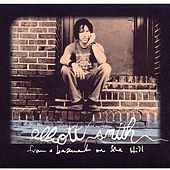


From a Basement on the Hill by Elliot Smith

For many fans, Elliott Smith's greatest gift to the world was his sadness. He was thirty-four when he died on October 21st, 2003, from two stab wounds to the chest. But the more we learned about his death, the less we knew. For a while, everybody (including the police) assumed it was suicide; then others started to suggest, ominously, that it wasn't, and a coroner's report, issued last December, said the evidence was inconclusive. So bereaved fans were left with nothing but their own dull grief, which came to seem like an echo of Smith's own implacable melancholy. Their sadness was his.

But sadness was never what set Smith apart from the other rumpled punky strummers. By 1994, when he started branching out from his post-punk band Heatmiser to record solo albums, the real surprise was Smith's sweetness. He was a punk who cleaned up good, who could turn an excruciating song about dope addiction into something whistle-able and Beatlesque. When he ambled onstage at the 1998 Oscars, fluorescent in an all-white suit, singing an expurgated "Miss Misery" (from the Good Will Hunting soundtrack), it somehow made sense. With songs like that, why shouldn't he have been serenading millions of listeners?

The crossover started and ended that night, and not just because he lost the Oscar to Celine Dion. His appealing 1998 album, XO, had grander production but slighter songs than 1997's marvelous Either/Or, and after 2000's Figure 8, he more or less disappeared. Now, days before the one-year anniversary of his death, comes From a Basement on the Hill, the album he was still tinkering with when he died.

It starts thick and hazy, with "Coast to Coast" slowly fading in; atop an elegant jumble of guitars, he sings, "I've got no new act to amuse you/I've got no desire to use you." Like most of the fifteen songs here, this one hints at drugs and death, wasted nights and wasted lives. This is an album about the seductions of oblivion, and a few of the more densely arranged songs mimic the characters in the lyrics, stumbling around without quite connecting.

More often, though, Smith teases extraordinary wit and warmth from songs that float lazily toward happiness. Despite the foreboding title, "Strung Out Again" is a lilting, slyly persuasive ode to a pleasure that comes and goes like the ocean: "The tide's coming in/And I'm strung out again." Then there's "Memory Lane," a bitter two-and-a-half-minute cautionary tale, sung and fingerpicked so gently that it sounds like a lark. And the woozy "Don't Go Down" begins with something resembling a joke: "I met a girl, snowball in hell/She was as hard and as cracked as the Liberty Bell."

Yes, there's plenty of sadness here. On "Pretty (Ugly Before)," Smith and his former Heatmiser bandmate Sam Coomes sing, "I felt so ugly before/I didn't know what to do." But the harmony tells a different story, and the two repeat the complaint until it sounds like a blissful affirmation.
The album's centerpiece is "A Fond Farewell," which is exactly what Smith fans need: an upbeat but ambivalent song with a contagious chorus that sticks in your head after the rest of the CD is over. When he murmurs, "This is not my life/It's just a fond farewell to a friend," you can't tell what, exactly, he's eulogizing: A bad habit? A good lover? Himself? But you can tell it will be missed.

KELEFA SANNEH(Posted Oct 28, 2004)

Monday, September 20, 2004

Man called Uncle


Outside the Ho Chi Minh Mausoleum in Hanoi. 12 September 2004

The line to the mausoleum encircled the entire building. People were arriving in busloads. School kids in their cute uniforms, local and foreign visitors standing in line under the sun, waiting for their turn to see and pay their respects to Uncle Ho. And wait we did. Counting the time spent depositing our bags and our cameras, we waited in line for maybe 30 minutes. At one point a woman behind us, a Vietnamese, became a bit impatient and voiced out a soft complaint. To which Queen, our Vietnamese companion and guide quickly retorted “we should be patient when seeing Ho Chi Minh.” After struggling to read aloud and pronounce correctly the message written on the big banner at the entrance that translates “Long Live the Socialist Republic of Vietnam,” amid gentle laughter from the others in line, we finally had our chance to go inside and see the man everybody calls uncle. We were greeted at the entrance by a deafening silence; the chilling coldness of the room and the blank stares of the mausoleum guards. Inside, the remains of Viet Nam’s great leader lay still, flanked by two more guards, their crisp white and yellow uniforms complementing perfectly the blood-red majesty of their national flag.

Ho died on September 2, 1969- exactly ten days and 35 years ago. Yet, he remains a central figure in Vietnamese society today. A leader revered and remembered.

Sunday, September 19, 2004

Hanoi Moving

Inside a bus headed for a rural village, I pointed the camera out the window and started clicking. These are the images that came out. Together with a few other shots around the city we see Hanoi moving.

hanoi moving. september 2004. photo by sep

hanoi moving.september 2004. photo by sep

hanoi moving. september 2004. photo by sep

hanoi moving. photo by sep

Hanoi moving. photo by sep

street vendor. Hanoi, Vietnam. September 2004. photo by sep